
Activists dressed as Trump removed from NZ research ship
Police weigh charges after Greenpeace boarded the Tangaroa over its seabed mining survey work.
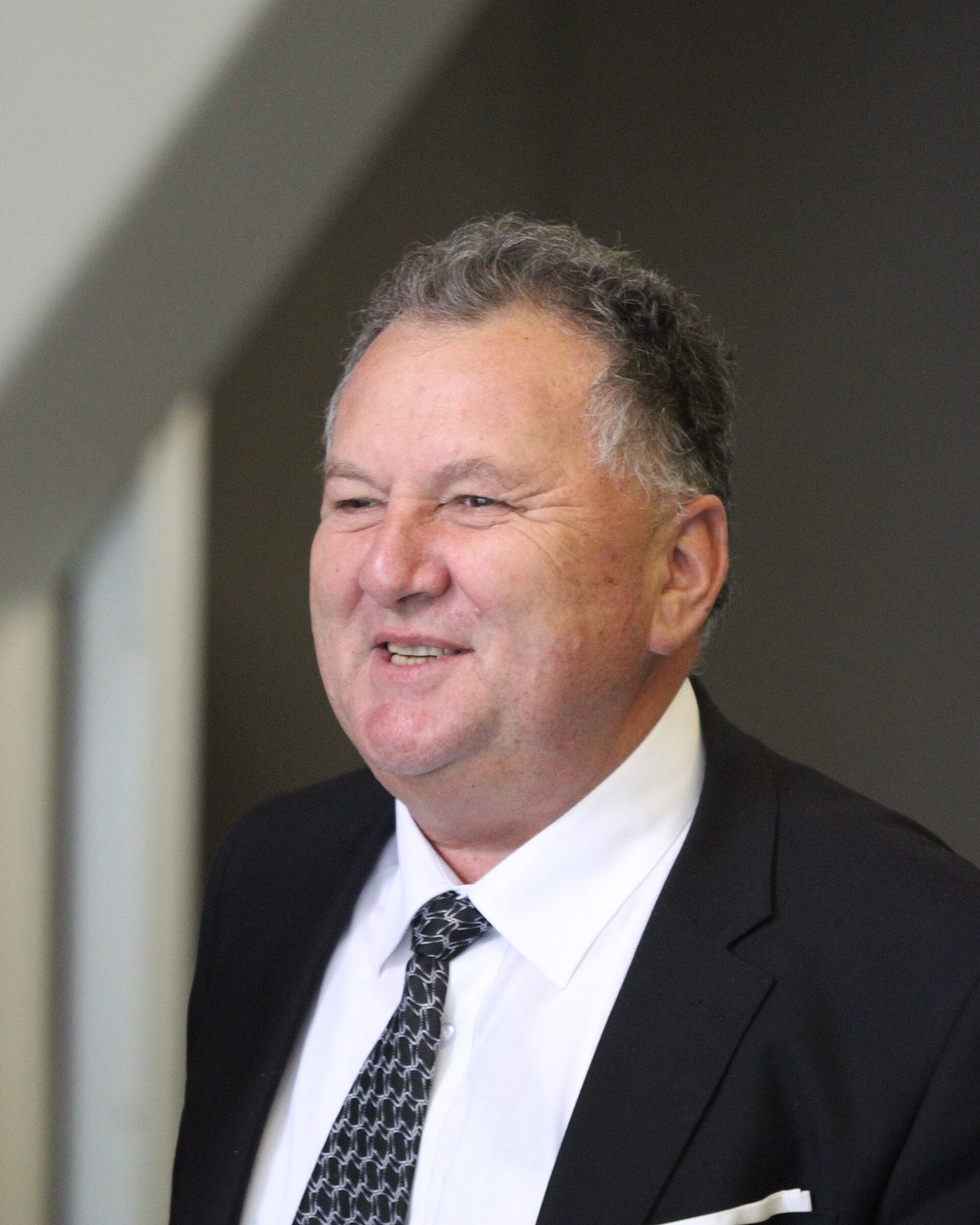
Five Greenpeace protesters were removed by police from the government-owned research ship Tangaroa in Wellington Harbour on Saturday, with charges now under consideration. One activist boarded dressed as US President Donald Trump and flew an American flag from the ship's railings, while another held a banner reading "Don't Mine the Moana".
The protest targeted more than the ship itself. Tangaroa had just completed a 65 day voyage to the Clarion-Clipperton Zone in the Pacific, where it surveyed the seafloor for Glomar Minerals, an American company hoping to mine polymetallic nodules for minerals including manganese, cobalt, nickel, copper and rare earths.
That has put a state-owned science vessel at the centre of a fight over who New Zealand's research fleet should be working for, and why. Greenpeace says the arrangement risks helping open the Pacific to seabed mining. Resources Minister Shane Jones says the protest is a stunt that misrepresents ordinary commercial science work.
The record
Tangaroa is owned and operated by Earth Sciences New Zealand, formed last year through the merger of NIWA and GNS Science. The vessel departed Tahiti on 29 July as part of a survey run jointly with UK Seabed Resources, a subsidiary of Glomar Minerals, covering two licence areas in the Clarion-Clipperton Zone spanning roughly 133,000 square kilometres, an area Glomar compares to the size of Louisiana.
Those licences are issued through the International Seabed Authority, the United Nations body that regulates mineral exploration in international waters. Glomar chief executive Chris Williams said the survey was "moving the company closer to the integrated dataset needed for commercial recovery" and that findings would be shared, adding to what he called the company's record of transparency.
Earth Sciences New Zealand described its role as providing "independent scientific research" using its expertise in deep-ocean environments, marine ecology and marine geology, saying the work helps regulators and stakeholders base decisions on robust evidence.
Jones, responding for the government, said the Tangaroa is run by an independent board within a government-owned agency that is "obviously driven to generate revenue as a part of its scientific mandate", and that using it for both domestic and international commercial work should surprise no one. He also noted New Zealand's general election is due on 7 November 2026, saying voters would decide on resource development policy at that point.
What doesn't add up
Greenpeace spokesperson Juressa Lee linked the Tangaroa survey to Project Vault, a reported US government plan to stockpile minerals for military purposes, saying seabed mining could feed into that agenda. The article does not set out what evidence connects this specific commercial survey to that programme, so the strength of that link is a claim, not an established fact.
Earth Sciences New Zealand referred questions about the specifics of its work for Glomar back to the company itself. That leaves basic questions unanswered: what the commercial charter is worth, how it was negotiated, and how a public research vessel's schedule is divided between government science and paid international contracts.
Jones's description of Tangaroa as run by "an independent board" sits alongside his own description of the agency as revenue-driven. Neither the minister nor Earth Sciences New Zealand has spelled out, in what's reported here, who ultimately decides which commercial clients the ship works for and what oversight applies to those decisions.
Glomar says its research adds to a "record of transparency" and that findings will be shared, but no timeline is given for when survey data becomes public, or whether it will be available before any commercial mining licence is granted.
Police say they are considering charges against the five protesters removed from the ship, but have not detailed what offence might apply.
The other side
Jones was direct in his defence of the arrangement, calling the protest a "parasitic stunt" designed to raise funds and accusing Greenpeace of trying to "scare and catastrophise and intimidate Kiwis". He said Tangaroa employs "highly educated staff" whose livelihoods should not be disrupted by activism, and defended commercial mineral research as a legitimate part of the vessel's scientific mandate.
Earth Sciences New Zealand's position is that its work is independent science, not advocacy for or against mining. It says its surveys generate the biological and ecological data needed to understand deep-sea environments and their potential impacts, which regulators and other stakeholders can then use to make evidence-based decisions.
Glomar's case is that its research is scientifically rigorous and transparent, pointing to its stated intention to share findings and to the scale of expertise involved in operating what it called "one of the most capable deep ocean research vessels in the world".
What happens next
Police will decide whether to lay charges against the five protesters removed from Tangaroa. Any charges, or a decision not to proceed, will help clarify what legal boundaries applied to the occupation.
RNZ has approached Glomar for further comment beyond its earlier statements, so a fuller company response may follow. Attention will also stay on Earth Sciences New Zealand's balance between public-good science and paid commercial charters, and whether more detail emerges about how those contracts are struck and overseen.
Internationally, the International Seabed Authority's regulatory process for Clarion-Clipperton Zone licences continues, with Glomar's survey data intended to feed into that process. Domestically, seabed mining and resource development policy remain live issues in the lead-up to the 7 November 2026 election, though how that debate unfolds is for voters and Parliament to determine.
Should a taxpayer-funded research ship be doing paid survey work for overseas mining companies?
Have your say on Facebook →This story is based on reporting by RNZ.
Read the original report →Our news is free for everyone. If it helps you, chip in to keep it independent.
Support us